Understanding the Engine Control Module (ECM) Repair Cost
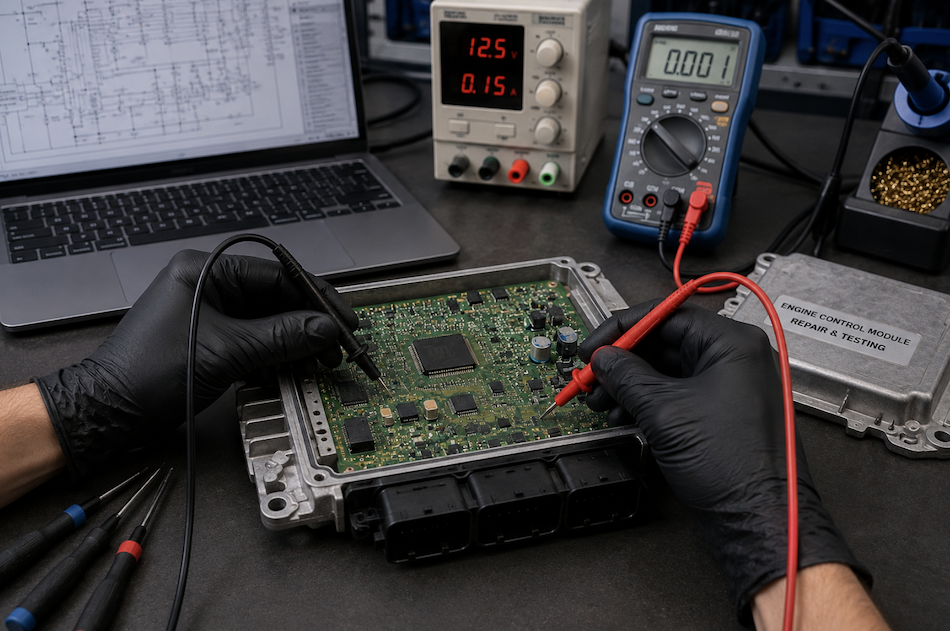
A failing ECM is one of the more expensive repairs a modern car can throw at you, mostly because the part itself is only half the job. Every replacement module has to be programmed to your specific vehicle before it'll even start, and that step adds real cost on top of the part. For a trusted auto repair shop in Peoria, AZ, ECM diagnosis and replacement is routine work, but it helps to know what you're actually paying for before a shop hands you a number.
What ECM Repair Actually Costs
On a mainstream vehicle, ECM replacement typically runs $600 to $1,800 total, parts, labor, and programming included. On European and luxury models, that range climbs to roughly $1,500 to $3,500, sometimes higher on more complex platforms. The gap isn't arbitrary, European manufacturers use more sophisticated modules with tighter integration into other vehicle systems, and the programming tools required are more specialized and expensive to access.
What's Actually in That Number
The module itself. A remanufactured or aftermarket ECM typically runs $300 to $1,500. A new OEM unit runs $800 to $2,500 or more, with luxury and European models sitting at the higher end of that range.
Labor. Physically removing and installing the module usually takes half an hour to two hours depending on where it's mounted and how accessible it is, typically $50 to $400 at standard shop labor rates.
Programming. This is the step a lot of DIY guides gloss over. Modern ECMs are VIN-specific and have to be flashed and paired to the vehicle's immobilizer system after installation, or the car simply won't start. Programming typically adds $100 to $600, with dealership programming sitting at the higher end.
Diagnosis. Before any replacement happens, proper diagnosis should confirm the ECM is actually the problem rather than a wiring fault, a failing sensor, or a battery issue. This typically runs $50 to $200 and is worth every penny, since replacing a good module because of a misdiagnosis is an expensive mistake to make twice.
Why European Vehicles Cost More to Repair
BMW doesn't actually call it an ECM, it's referred to internally as the DME, or Digital Motor Electronics, and the naming difference reflects a genuinely more integrated system than what you'll find on a mainstream domestic or Asian import. The same is true across most European brands: modules are tied more tightly into transmission control, stability systems, and security features, which means replacement and programming both require manufacturer-level or manufacturer-adjacent diagnostic equipment rather than a generic tool.
That complexity is part of why check engine light diagnosis matters so much on these vehicles specifically. A code that looks like a simple sensor fault on a generic scanner can actually trace back to a module communication issue that a basic tool won't catch.
Symptoms That Point to an ECM Problem
A failing ECM tends to produce a cluster of symptoms rather than just one:
Poor fuel economy that doesn't have an obvious cause
Erratic engine behavior, rough idle, or unexpected stalling
The check engine light illuminating with codes in the P0601 to P0607 range, which specifically indicate internal control module memory errors
Transmission shifting that feels off, since many transmissions take their cues from the same module
That last point is worth taking seriously. Transmission slipping and unusual shift behavior can sometimes trace back to a module or sensor issue rather than a mechanical transmission fault, which is exactly why proper diagnosis matters more than guessing based on symptoms alone.
Module Problems Aren't Unique to the Engine
The ECM handles engine and powertrain functions, but it's not the only control module that can fail and drive up a repair bill. Airbag control modules, for instance, follow a similar pattern of diagnosis, fault codes, and sometimes replacement, and what goes wrong with a BMW's airbag module specifically is a good illustration of how module-level electrical faults get diagnosed and resolved correctly rather than just reset and hoped away.
Sensor-related module faults show up in less obvious places too. We've walked owners through wheel speed sensor problems on Mercedes Sprinter vans more than once, and the diagnostic approach, confirming the actual fault before replacing anything, is the same discipline that keeps an ECM repair from turning into an expensive guessing game.
Repair vs. Replacement
Not every ECM issue requires a full replacement. A software glitch or corrupted programming can sometimes be resolved with a reflash for $150 to $300, considerably cheaper than a full module swap. Physical damage, like a fried circuit board from water intrusion or a voltage spike, usually means the unit is beyond repair and replacement is the only real option. A competent diagnosis should tell you which situation you're actually in before any money gets spent.
Getting an Accurate Diagnosis
Call (602) 464-6556 and we'll talk through the symptoms you're seeing before recommending anything.
You can also request an estimate here once you have a clearer picture of what's involved.
For BMW owners specifically, our BMW of Peoria service team works with DME diagnostics regularly and can confirm whether a module is actually at fault before you commit to a repair.
Frequently Asked Questions
How Much Does It Cost To Replace An Engine Control Module?
On a mainstream vehicle, total cost typically runs $600 to $1,800 including the module, labor, and programming. European and luxury vehicles run higher, generally $1,500 to $3,500, due to more complex module integration and the specialized equipment required for programming.
What Are The Signs Of A Failing ECM?
Common symptoms include poor fuel economy, rough idle or stalling, a check engine light with codes in the P0601 to P0607 range, and transmission shifting that feels inconsistent. These symptoms can also stem from wiring, sensor, or battery issues, which is why a proper diagnosis matters before assuming the module itself has failed.
Can An ECM Be Repaired Instead Of Replaced?
Sometimes. Software glitches and corrupted programming can often be fixed with a reflash for $150 to $300. Physical damage from water intrusion or a voltage spike usually means the module needs to be replaced rather than repaired.
Why Do European Cars Cost More To Repair An ECM?
European manufacturers, BMW included, build more tightly integrated control modules that communicate deeply with transmission, stability, and security systems. That complexity requires more specialized programming equipment, which is reflected in both the parts and labor cost compared to mainstream vehicles.
Do I Need A New ECM Programmed To My Specific Vehicle?
Yes. Modern ECMs are VIN-specific and must be flashed and paired to your vehicle's immobilizer system after installation. A module that isn't properly programmed won't allow the car to start, regardless of whether the part itself is functioning correctly.