How to Fix Mercedes Sprinter Wheel Speed Sensor Problems
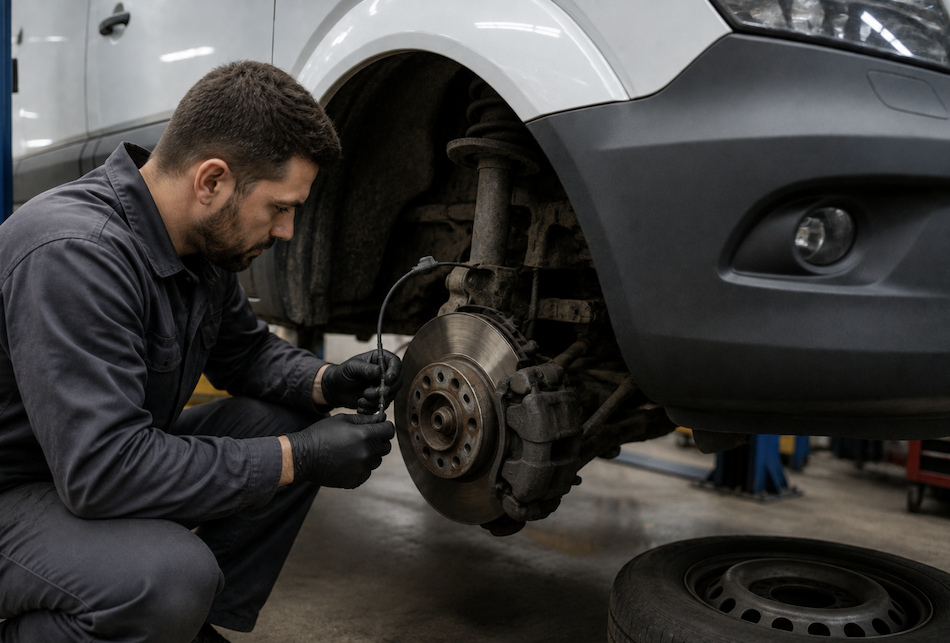
A wheel speed sensor is a small, easy-to-overlook part, but when one fails on a Sprinter, it doesn't stay small for long. Your ABS light comes on, your traction control disappears, and depending on the fault, the transmission can even start shifting differently, since it uses the same wheel speed data to time its gear changes. If you're running a Sprinter for work, that's not a minor annoyance, it's a van you may not feel comfortable driving loaded until it's sorted out. A qualified European auto repair specialist in Peoria can usually get to the bottom of it quickly, but it helps to understand what's actually going on before you start pulling wheels off.
What the Wheel Speed Sensor Actually Does
Each wheel on your Sprinter has a sensor that reads a toothed ring, often called a tone ring or reluctor ring, mounted near the wheel hub or CV joint. As the wheel spins, the sensor generates a signal proportional to how fast that ring is rotating, and it sends that data continuously to the van's ABS and ESP (electronic stability program) control module. That data is what allows the ABS to modulate brake pressure at each wheel individually during hard braking, what lets traction control detect wheel slip, and what the transmission control unit uses to time shifts smoothly. When one sensor stops reporting accurately, all three systems lose a piece of information they depend on.
Symptoms of a Failing Wheel Speed Sensor
A failing sensor rarely stays quiet for long. The most common signs include:
ABS and ESP warning lights on the instrument cluster, sometimes accompanied by an "ABS Inoperative" or "ESP Inoperative" message
Traction control disabling itself, particularly noticeable on loose or wet surfaces
Cruise control becoming unavailable, since it relies on the same wheel speed data
Jerky or delayed transmission shifts, because the transmission control unit loses a reference point it uses for shift timing
A brief pull to one side under hard braking, if only one wheel's data has dropped out
Because a single sensor's data feeds several different systems, one failure can trigger what looks like three or four separate problems at once. That's normal, and it usually points back to one faulty sensor rather than three unrelated ones. It's worth separating this from a different, unrelated complaint too, if your van shakes when you brake at high speeds rather than throwing warning lights, that's almost always rotors or suspension wear, not the wheel speed sensor.
What Actually Causes Sprinter Wheel Speed Sensors to Fail
A few specific issues account for most of the failures we see:
Physical damage to the wiring or connector, often from road debris. Sprinters ride lower when loaded, and the sensor wiring runs close enough to the wheel well to take a hit from gravel or debris kicked up on unpaved job sites and construction roads.
A contaminated tone ring, where accumulated dirt, brake dust, or corrosion sits between the sensor and the ring, distorting the signal without necessarily killing it outright. This is especially common in dusty environments like Peoria, where fine desert grit works its way into wheel wells more persistently than in milder climates.
Corroded connector pins, which cause an intermittent rather than constant fault, sometimes clearing itself temporarily after the connector is disturbed or reseated.
Wiring harness chafing, where the harness rubs against a suspension component through repeated wheel travel until the insulation wears through.
Diagnosing the Problem the Right Way
A scan tool that can read live ABS data is the right starting point, since it shows you which wheel is actually failing to report rather than making you guess from the warning light alone. Once you know which corner is affected, a multimeter check on the sensor itself tells you a lot: most wheel speed sensors read somewhere in the 800 to 1,200 ohm range when healthy, though the exact spec varies by model year and sensor design, so it's worth checking service data for your specific Sprinter rather than assuming a single number applies across the board. A reading well outside that range, or one that fluctuates as you wiggle the connector, points toward the sensor or its wiring rather than something further down the line.
It's also worth a close visual check of the tone ring itself while the wheel is off, the same wheel-off access point you'd use to remove a rear brake disc for a pad or rotor job. A ring caked in debris or showing physical damage to its teeth will produce a bad signal even with a perfectly functional sensor plugged in, and cleaning it is sometimes all that's needed.
A Complication Worth Knowing About Before You Start
Not every wheel speed fault is a clean, one-part fix. Technicians occasionally run into a Sprinter reporting one wheel spinning noticeably slower than the others, with a fault that persists even after replacing both the sensor and the wheel bearing. When that happens, the culprit is usually something less obvious in the reluctor ring or the ABS module's calibration rather than the sensor itself. It's not the common case, but it's common enough that if a straightforward sensor swap doesn't clear the fault, don't assume you did something wrong, it may genuinely need a technician with the right diagnostic equipment to chase further.
OEM Sensors Are Worth the Extra Cost
This is a case where the cheaper part isn't always the cheaper fix. Aftermarket wheel speed sensors sometimes produce a signal that's technically present but not clean enough for the ABS module to trust, especially on vans that see rough or dusty duty cycles. It's a common enough story in repair circles: a shop fits an aftermarket sensor to save the customer money, the fault doesn't clear, and the job ends up redone with a genuine Mercedes-Benz part that fixes it the first time. On a vehicle where the ABS and traction control genuinely matter for safe stopping distances under load, that's not the place to cut corners.
Why This Matters More on a Commercial Van
A Sprinter carrying a full load stops very differently than an empty one, and that's exactly the situation ABS and traction control are designed to manage. Losing those systems doesn't just trigger a warning light, it removes a real safety margin at the moment you're most likely to need it. For fleet operators, there's also the practical cost of downtime to weigh against the repair itself, which is usually a compelling reason to get a wheel speed fault diagnosed properly the first time rather than working around a warning light and hoping it resolves on its own.
Other Sprinter Maintenance Worth Staying On Top Of
A wheel speed fault is often the moment owners realize how much a Sprinter's maintenance needs differ from a passenger car's. Diesel Sprinters generally want an oil change every 5,000 miles on conventional oil, stretching to around 10,000 on synthetic, tighter than a lot of owners expect for a vehicle this size, especially if you're doing dusty, stop-and-go work.
The power steering system deserves the same attention. Sprinters aren't universally forgiving about fluid type, and using the wrong one can shorten pump life the same way a neglected sensor shortens the life of your ABS system, both are small, inexpensive things to get right that prevent much larger bills later.
DIY or Call a Professional?
Replacing a sensor itself is within reach for someone comfortable with basic wheel-off work: the parts cost is generally modest, and the job itself is usually a half hour to ninety minutes depending on which corner and how accessible it is. Where it gets trickier is the diagnostic step beforehand, correctly identifying whether the fault is the sensor, the tone ring, the wiring, or something further into the ABS system takes a scan tool capable of reading live ABS data, not just a generic code reader. Get that step wrong and you can replace a perfectly good sensor while the actual fault stays unresolved.
If you'd rather have it diagnosed properly the first time, Mercedes Sprinter service in Peoria means working with technicians who see this exact fault regularly on commercial vans, not just passenger cars.
Getting It Fixed
Wondering what a wheel speed sensor repair on your specific Sprinter will run? Request an estimate here and we'll give you a straight answer once we've had a look.
You can also call (602) 464-6556 to talk through your symptoms before booking anything.
Prefer to reach out a different way? Get in touch online, and we'll follow up with next steps.
Frequently Asked Questions
What Are The Symptoms Of A Bad Wheel Speed Sensor On A Sprinter?
The most common signs are an illuminated ABS or ESP warning light, traction control disabling itself, cruise control becoming unavailable, and jerky or delayed transmission shifts. Since one sensor feeds data to multiple systems, several of these symptoms often appear together from a single faulty sensor.
Can I Drive A Sprinter With A Bad Wheel Speed Sensor?
You can usually still drive it, but your ABS and traction control will be disabled, meaning your wheels can lock up under hard braking and stability control won't intervene on loose or wet surfaces. It's drivable in the short term but not something to leave unaddressed, especially on a van that's regularly loaded.
How Much Does It Cost To Replace A Wheel Speed Sensor On A Sprinter?
Parts alone are generally inexpensive for a genuine sensor, with labor typically running a half hour to ninety minutes depending on which wheel and how accessible it is. Total cost climbs if the fault turns out to be a contaminated tone ring or damaged wiring rather than the sensor itself, which is why an accurate diagnosis before replacement matters.
Should I Use An OEM Or Aftermarket Wheel Speed Sensor?
OEM is the safer choice for a Sprinter. Aftermarket sensors sometimes produce a signal that isn't clean enough for the ABS module to read reliably, particularly on vans exposed to dust and rough duty cycles, which can mean paying for the repair twice.
Why Does My Sprinter's Transmission Shift Differently When The ABS Light Is On?
The transmission control unit uses wheel speed data, the same data the ABS system relies on, to time its shifts smoothly. When a wheel speed sensor fails, the transmission loses that reference point, which can show up as jerky or delayed shifting alongside the ABS and traction control faults.