When Should You Replace a BMW Parking Brake Actuator?
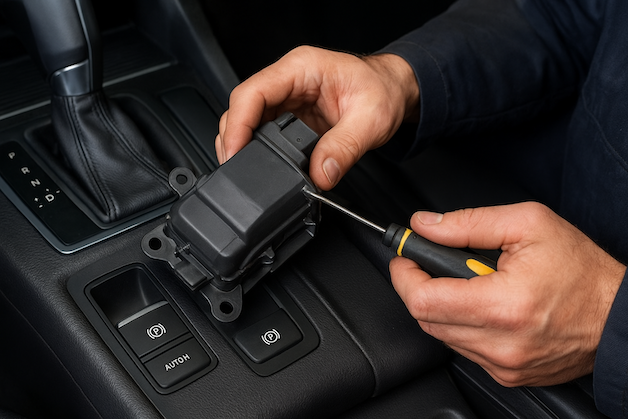
BMW replaced the traditional handbrake lever with an electromechanical system years ago, internally called EMF (Elektromechanische Feststellbremse), and most owners never think about it until a warning appears on the dash. The actuator, a small motor and gearbox assembly, is what actually pulls the rear brakes tight when you press the parking brake button. When it fails, the symptoms are usually obvious, but the cause isn't always what it looks like. If you own a BMW in Peoria, Arizona, this is one of those repairs worth understanding before you assume the worst and pay for a full module replacement you might not need.
Check the Battery Before You Assume the Actuator Failed
This is the step almost every guide buries or skips, and it's the one that saves people money. A weak or low battery, anything under about 12.4 volts, can trigger a false "Parking Brake Malfunction" warning that has nothing to do with the actuator itself. Before assuming the module has failed, it's worth confirming battery health and trying a basic reset: locate the parking brake fuses (commonly numbered among the trunk fuse panel), pull them for about five minutes, then reinsert and cycle the brake button several times. If the fault clears, you've saved yourself an expensive repair you didn't need.
Real Warning Signs of Actuator Failure
"Parking Brake Malfunction" on the dash or iDrive screen. This is the most common symptom, and it means the system has detected a fault and may have disabled the electronic parking brake entirely.
Grinding or screeching noise from the rear of the car. This points specifically to stripped internal plastic gears inside the actuator motor, the single most common mechanical failure in these units.
The brake stuck on or stuck off. Stuck off means no parking brake function at all, a real safety concern on any incline. Stuck on is worse in a different way, since it can immobilize the car entirely.
Auto Hold stops working. This feature runs through the same system, so a failing actuator often takes Auto Hold down with it before the parking brake itself fully fails.
One important distinction: the console button and the actuator motor are two separate components, and they fail differently. A cracked or unresponsive button is a switch problem, usually a straightforward, inexpensive swap. Grinding noises and stuck-brake symptoms point to the actuator itself, a more involved repair.
What the Fault Codes Actually Tell You
A proper scan of the EMF module, not a generic engine code reader, will typically show codes in a range like 600D, 600E, 48051D, or 480522 when the actuator itself is at fault. A code like 480586 specifically points to a coding or calibration error after a replacement was already done, which is a different problem from a failed part. This distinction matters because it tells a technician whether you're looking at a new part or a programming fix on the one you already have.
What Replacement Actually Involves
Central-actuator designs, common on older platforms, require removing the rear wheels, calipers, and rotors to access the Bowden cables the unit pulls on, a job that typically runs three to five hours even for an experienced technician. Newer platforms mount individual motors directly at each rear caliper instead, which changes the access process but not the fundamental need for careful, precise work.
Whichever design your BMW uses, the new unit isn't plug-and-play. It requires calibration with BMW-specific diagnostic software after installation to properly initialize and clear the old fault codes. Skipping or rushing this step is why some replacements don't actually resolve the warning the first time.
What It Costs
Dealer pricing for a full actuator replacement commonly starts around $700 and can run considerably higher, sometimes into four figures, depending on the model and whether both sides need attention. Independent shops with genuine BMW diagnostic capability typically come in well below dealer pricing for the same repair, provided they have the correct calibration tools, not every general shop does.
If your BMW is stuck with the parking brake engaged and you need to move it, there's a manual emergency release cable located in the trunk specifically for this situation, worth knowing about before you're standing in a parking lot trying to figure it out.
Why This Isn't a Job to Guess Your Way Through
An improperly diagnosed or improperly calibrated repair doesn't just fail to fix the problem, it can leave you with a parking brake that behaves unpredictably, which is a genuine safety issue rather than a minor inconvenience. This is similar to how BMW airbag system faults need to be correctly diagnosed and cleared with the right equipment rather than reset and hoped away, both are safety systems where a shortcut costs more than it saves.
If you're weighing whether this is a repair to tackle yourself, it's worth being honest about where DIY makes sense on a BMW and where it doesn't. The real tradeoffs between DIY and professional BMW repair apply directly here, the parts cost isn't the hard part, the calibration step is.
And if the actuator issue turns out to be one symptom of a bigger underlying problem, it's worth having a sense of scale. What a larger BMW repair like a transmission issue actually costs gives useful context for where a parking brake repair sits relative to bigger-ticket BMW work.
Getting It Diagnosed Correctly
Call (602) 464-6556 and describe what you're seeing, we can often tell you whether this sounds like a battery issue, a switch, or the actuator itself before you even bring the car in.
You can also request an estimate here once you have a clearer sense of what's going on.
Frequently Asked Questions
What Are The Signs Of A Failing BMW Parking Brake Actuator?
The most common signs are a "Parking Brake Malfunction" message on the dash, grinding or screeching noises from the rear of the car, the brake sticking on or off, and the Auto Hold feature failing to engage. A weak battery can also mimic these symptoms, so it's worth ruling that out first.
Can A Weak Battery Cause A False Parking Brake Warning?
Yes. Battery voltage below roughly 12.4 volts can trigger a false "Parking Brake Malfunction" warning even when the actuator itself is fine. Checking battery health and performing a basic fuse reset is worth doing before assuming the module has failed.
How Much Does It Cost To Replace A BMW Parking Brake Actuator?
Dealer pricing commonly starts around $700 and can run into four figures depending on the model and scope of the repair. Independent shops with proper BMW diagnostic and calibration equipment typically charge meaningfully less for the same repair.
Is The Parking Brake Button The Same As The Actuator?
No, they're separate components that fail differently. A cracked or unresponsive console button is a switch problem, usually a simple and inexpensive fix. Grinding noises or a brake that's stuck on or off point to the actuator motor itself, a more involved repair.
Does A New Parking Brake Actuator Need To Be Programmed?
Yes. A replacement actuator requires calibration with BMW-specific diagnostic software to properly initialize and clear old fault codes. Without this step, the parking brake may not function correctly even with a new, working unit installed.