Why Are Porsche Oil Changes So Expensive?
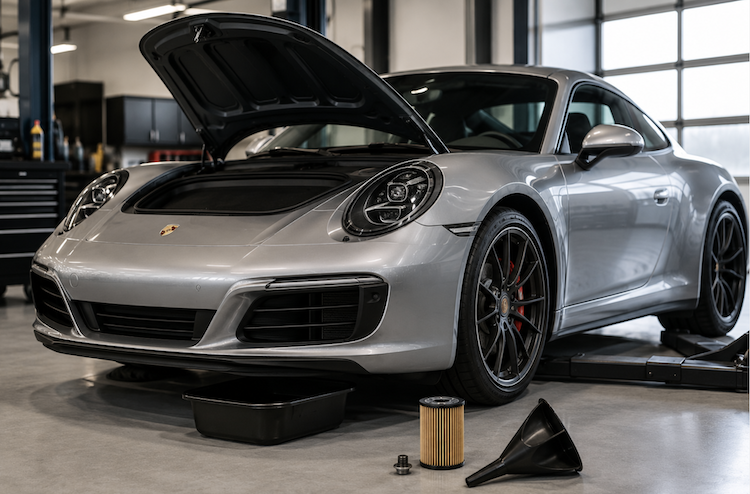
Porsche is famous for its luxury and high-performance cars, and regular maintenance is essential to keep them performing at their best. Among routine services, the oil change stands out as one that consistently surprises owners with its cost. Auto repair experts recommend changing oil every 5000 miles. A Porsche oil change typically costs between $200 and $400 depending on the model and where the service is performed - significantly more than a mainstream vehicle. But the reasons behind that cost are more specific than most guides explain. Here is an honest breakdown of exactly why Porsche oil changes cost what they do, and what you can do to manage that cost without compromising on quality.
What Makes a Porsche Oil Change More Expensive Than a Standard Service?
Several factors combine to push Porsche oil change costs above the mainstream average. Understanding each one helps you make informed decisions about where to service your vehicle and what you are actually paying for.
The Porsche Oil Specification Requirement
The single biggest cost driver is the oil specification itself. Porsche vehicles do not simply require any fully synthetic oil - they require oil meeting Porsche's own approval rating.
The most common specification is Porsche A40, required for most Porsche petrol engines including the Cayenne, Macan, Panamera, and 911 variants. This specification sets precise requirements for viscosity, thermal stability, and additive chemistry that generic synthetic oils - even well-known premium brands - do not necessarily meet.
Using oil without the correct Porsche approval rating can affect engine protection, turbocharger lubrication on turbocharged models, and may affect warranty coverage on newer vehicles. The approval rating is not a marketing distinction - it reflects genuine engineering requirements specific to Porsche's high-output engines.
Porsche A40 approved oils cost more than generic synthetics, and Porsche engines also require larger oil volumes than most mainstream vehicles - the Cayenne V6, for example, takes approximately 8.5 liters per change. The combination of specification and volume directly increases the material cost of every oil change.
It is also worth noting that Porsche recommends oil changes every 10,000 to 15,000 miles with full synthetic oil - not every 5,000 miles as some older guides suggest. The longer interval partially offsets the higher per-service cost over the ownership period.
Why Porsche Requires Specialist Oil Filters
Porsche vehicles use oil filters engineered specifically for their engines rather than generic filters that fit multiple vehicle types. These filters are designed to handle the higher oil pressures and temperatures generated by Porsche's performance engines, and they use higher-grade filter media to trap finer contaminants without restricting oil flow.
The filter housing design also varies significantly across Porsche models - the Cayenne, Macan, 911, and Panamera each have different filter configurations that require model-specific components. A shop without Porsche experience may not stock the correct filter for your specific variant, which either delays the service or results in the wrong component being fitted.
Genuine Porsche filters or OEM-equivalent filters meeting the correct specification cost more than generic alternatives - but fitting an incorrect filter on a high-performance engine is a false economy that risks contamination and reduced engine protection.
Why Porsche Oil Changes Require Specialist Technicians
When you need to change the Porsche car oil, it is essential to engage expert technicians. They have solid knowledge about the complex design of Peoria Porsche car engines, which makes it easier to detect potential problems in the engine or other components during the service.
Beyond the oil change itself, a proper Porsche service requires resetting the oil service indicator using Porsche-compatible diagnostic software - not a generic OBD2 scanner. Porsche's PASM system and oil condition monitoring require correct system access to reset properly. A shop without the correct diagnostic equipment cannot complete this step, which means the service warning will remain active even after a correct oil change.
Technicians who work on Porsches regularly are also more likely to identify developing issues - unusual oil consumption, early signs of seal deterioration, or turbocharger wear - during the service. This familiarity with the platform is worth paying for and is not something a general service technician develops without specific Porsche experience.
Authorized Center vs Independent Specialist - What Is the Real Cost Difference?
Porsche car owners often visit authorized centers to ensure their cars receive reliable expert service. Authorized centers use genuine components and certified technicians with manufacturer-specific diagnostic tools, and they can perform warranty repairs and software updates that only franchised dealers can access.
However, for vehicles outside the manufacturer warranty period, a qualified independent Porsche specialist represents a genuinely competitive alternative. The key distinction is qualified independent specialist - not a general garage.
A franchised Porsche dealership typically charges $300 to $500 for an oil change on most models. A qualified independent Porsche specialist using the correct Porsche A40 approved oil, correct specification filters, and proper diagnostic equipment typically charges $200 to $350 for the same service - a meaningful saving per visit that compounds significantly over years of ownership.
At Arrowhead Imports in Peoria, we service Porsches using the correct specification oil and filters for every model we work on, and we reset the service systems correctly after every oil change. For Porsche owners whose vehicles are outside the manufacturer warranty period, the quality of the service is identical to the dealership at a more competitive price point.
How to Keep Porsche Oil Change Costs Manageable
The overall cost of replacing the oil in your Porsche varies with oil type, labor charge, and location. Although Porsche car maintenance costs are comparatively higher than mainstream vehicles, regular oil changes are essential for engine longevity and performance.
A few practical steps help manage the cost without compromising on quality:
Follow The Correct Interval - Porsche's recommended 10,000 to 15,000 mile or annual interval with the correct synthetic oil is more economical than unnecessary early changes. Do not shorten the interval without reason, but do not extend it beyond the annual recommendation in hot climates like Peoria where heat degrades oil faster.
Use A Qualified Independent Specialist - For vehicles outside the manufacturer warranty, a qualified independent Porsche specialist delivers the same quality of service at a meaningfully lower labor rate than a franchised dealership.
Address Issues Early - Minor oil leaks, unusual consumption, or filter warning lights addressed promptly are always less expensive than the same issues left to develop. The Porsche car oil service is also an opportunity to identify developing issues before they become significant repairs.
What Our Peoria Technicians See
At Arrowhead Imports, the Porsches that arrive in the best condition consistently have one thing in common - complete service histories using the correct Porsche A40 approved oil at the correct intervals. The vehicles that develop early engine wear, turbocharger issues, or excessive oil consumption almost always have gaps in their service history or evidence of incorrect oil specification being used at some point.
The most common mistake we see is owners using a premium synthetic oil that does not carry the Porsche A40 approval - assuming any high-quality synthetic is equivalent. For a standard commuter vehicle this assumption is often acceptable. For Porsche's high-output turbocharged engines operating at sustained performance temperatures, the approval rating reflects a genuine engineering requirement that matters over the life of the engine.
If you are looking for a qualified Peoria Porsche specialist for your next oil change, our team uses the correct specification for every Porsche we service. Book your service here.
Frequently Asked Questions
Why Is A Porsche Oil Change So Expensive Compared To Other Cars?
Three factors combine to increase the cost - Porsche requires oil meeting its own A40 approval specification which costs more than generic synthetic oil, Porsche engines take a larger oil volume than most mainstream vehicles, and the service requires Porsche-compatible diagnostic equipment to reset the service systems correctly. All three contribute to a higher per-service cost than a standard vehicle.
What Oil Specification Does A Porsche Need?
Most Porsche petrol engines require oil meeting the Porsche A40 specification. This approval rating sets specific requirements for viscosity, thermal stability, and additive chemistry. Using oil without the correct Porsche approval - even a premium synthetic brand - does not meet the manufacturer's specification and can affect engine protection over time. Always confirm the correct specification for your specific model in the owner's manual.
How Often Should A Porsche Oil Change Be Done?
Porsche recommends oil changes every 10,000 to 15,000 miles or once per year, whichever comes first - not every 5,000 miles as some older guides suggest. In hot climates like Peoria, AZ, sticking to the annual interval regardless of mileage is advisable as heat degrades synthetic oil faster than in cooler regions.
Is It Cheaper To Get A Porsche Oil Change At An Independent Specialist Than A Dealership?
Yes, typically 20 to 35 percent less for the same quality of service. The important factors are confirming the specialist uses the correct Porsche A40 approved oil, correct specification filters, and has the diagnostic equipment to reset the service indicator properly. A general garage without specific Porsche experience is not the same as a qualified independent specialist.
Can I Use Any Synthetic Oil For A Porsche Oil Change?
No. Porsche requires oil meeting the Porsche A40 approval specification - not just any fully synthetic oil. The approval rating reflects specific engineering requirements for Porsche's high-output engines. Using oil without the correct approval may not cause immediate visible problems but affects engine protection over time and can affect warranty coverage on newer models.
What Happens If I Skip A Porsche Oil Change?
Skipping or significantly delaying an oil change on a Porsche accelerates engine wear, particularly on turbocharged models where oil condition directly affects turbocharger lubrication. Degraded oil also increases the risk of oil sludge buildup in the engine, which is expensive to address once established. The cost of a missed oil change is always higher than the service itself when measured over the life of the engine.
