How Many Engine Mounts Does a Car Have?
Each time you put the key in the ignition and turn on your car’s engine, you expect a smooth ride. You want the engine to be purring, not rattling your teeth. Although the suspension system is a major factor when it comes to a smooth ride, there is one component that is doing its part behind the scenes to ensure a smooth ride. That component is the engine mount.
Oftentimes in our shop at Arrowhead Imports, we encounter customers who have been perplexed by unusual vibration or clunking sounds. In most cases, they immediately point to a problem with the suspension. However, it is not unusual for it to be a problem with faulty motor mounts on a car. Engine mounts are small but incredibly important parts that are tasked with holding the engine in place while also dampening the huge vibration that is produced during the process of combustion. Without them, your ride would be quite unpleasant!
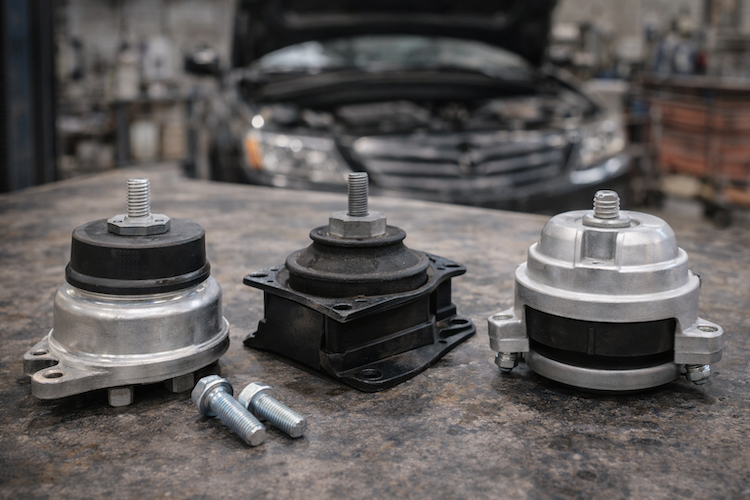
Types of Engine Mounts in a Car
Not all mounts are created equal. Varying materials and designs are used depending on what is needed.
Rubber Bushings
Rubber bushings are the most common type you are likely to see on the road. They are very simple, durable, and inexpensive. A bracket of steel holds a block of heavy-duty rubber. This rubber serves as a buffer between the engine and the frame. Rubber may crack with time due to heat.
Hydraulic Mounts
These are the next step in comfort enhancement. These are fluid-filled with either glycol or hydraulic fluid to provide better cushioning against vibrations than rubber. They are perfect for a luxurious car where silence is indeed golden. However, their replacement costs are higher and may leak fluid when they fail.
Active or Electronic Mounts
These are for those who opt for high-tech. They come with sensors that can sense the engine vibration and work towards negating it. You can find these mounts in high-performance cars. They may be a little pricey when it comes to repairs.
How Many Engine Mounts Does a Car Have?
The number of engine mounts that are used in vehicles can vary, and for most passenger vehicles, the number is between three and four. This also includes the transmission mount, which is used to hold the transmission in place and is used in conjunction with engine mounts to stabilize the whole powertrain.
The design of your drivetrain is an important factor that determines the number. In the case of a front-wheel drive car that a transversely mounted engine, the mounts will be three or four. In the case of a rear-wheel drive car, the mounts will be two on the side of the engine and one for the transmission on the other side.
For larger cars, such as trucks or SUVs with heavy-duty engines, there could be more mounts because the car is heavier and produces more torque. Smaller cars, such as compact cars, may only have three mounts. If you are not sure about your car, we can check it out the next time you come in for service and answer. How many engine mounts in a car? Now you know.
Symptoms of a Failing Car Engine Mounting
Engine mounts have rubber and metal components. As such, engine mounts have a tendency to go bad with time. It is imperative to be aware of the symptoms to save yourself from future costly repairs.
The first and most noticeable symptom would be the extreme vibration. If your steering wheel or seat vibrates greatly during idling, it's probably due to the degradation of the rubber in the mount and the inability of the mount to dissipate the energy produced by the engine.
You may also hear impact noises. When you hear a clunk or banging noise coming from the engine compartment while you're accelerating or shifting gears, it means the engine is moving excessively, which indicates that the engine mount has failed totally, allowing the engine to move and come into contact with the frame of the car.
Another sign of a possible transmission problem is engine motion. When you open the hood and someone revs the engine, excessive motion means there is a problem. While some motion is to be expected, it should not appear as though the engine is trying to jump out of the car.
Keep Your Ride Smooth
Though engine mounts may be small in size, their task is quite large in magnitude. They keep your car’s frame intact and make your ride comfortable too. Overlooking a faulty engine mount may result in misaligned drivetrain or damage to radiator hoses or wiring harnesses.
If you are experiencing any of the symptoms that we have discussed, come on down to Arrowhead Imports for a look. We can determine the integrity of your engine mounts and have your car running like normal again. Regular checks are the best way to prevent problems like this from occurring. Should you need a trusted Mercedes mechanic in Peoria, for example, don't hesitate to reach out to our experienced team!