Can You Mix Car Engine Oils? Risks and Safety Tips
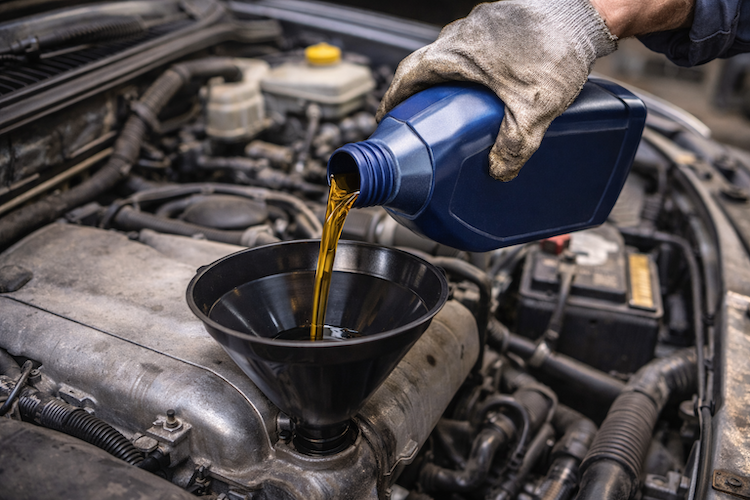
You're a quart low, the only bottle on the shelf isn't the type your owner's manual calls for, and you're standing in a gas station parking lot trying to decide what to do. Can you actually mix car engine oils, or are you about to cause real damage? We hear a version of this question constantly at Arrowhead Imports, usually from someone who's already poured the oil in and is now wondering if they made a mistake.
The honest answer is more nuanced than a flat yes or no. Some kinds of mixing are genuinely fine. Others aren't dangerous exactly, but they quietly reduce how well your oil protects your engine. And a few combinations should be avoided altogether. It's the same instinct that makes people wonder whether it's actually dangerous to keep driving with the check engine light on, a small dashboard worry that deserves a real answer instead of a guess. Here's what's actually happening chemically when oils mix, and what to do depending on your specific situation, whether that's an emergency top-off or a routine oil change where you're one bottle short.
The Short Answer
Yes, you can mix most motor oils without causing immediate engine damage. All oils sold in the U.S. have to meet API (American Petroleum Institute) and, for many passenger vehicles, ILSAC certification standards, which means they're formulated to be chemically compatible with each other even across brands. We cover this same certification standard in more detail in our breakdown of which engine oil actually suits a Mercedes-Benz, since matching the right spec matters just as much as understanding what happens if you don't. That certification is the baseline safety net. What changes the outcome isn't whether mixing is possible, it's what you're mixing and how often you're doing it.
What Actually Happens When You Mix Oils
Mixing Different Brands, Same Type and Viscosity
This is the safest scenario by a wide margin. If you're topping off with a different brand but the same viscosity grade and the same type, synthetic with synthetic, conventional with conventional, the additive packages differ slightly between manufacturers, but both oils meet the same certification standards. You won't notice a performance difference, and there's no meaningful risk.
Mixing Different Viscosity Grades
This is where things get less predictable. Viscosity is a measure of how easily oil flows, and it's chosen specifically for your engine's tolerances and your climate. Mix a 5W-30 with a 10W-30, for example, and you end up with an intermediate viscosity that doesn't precisely match either grade. It won't destroy your engine, but it can affect how well the oil flows at startup or under heat, which matters more than people expect in a climate like Peoria's, where summer engine bay temperatures push oil to its performance limits regardless of what's in the bottle.
Mixing Synthetic and Conventional Oil
Also generally safe from a compatibility standpoint, but worth understanding what you're actually doing: you're diluting the synthetic oil's superior properties down toward conventional performance. A synthetic blend, in fact, is exactly this combination sold intentionally. If you top off a full synthetic fill with conventional oil because it's all you have, you haven't damaged anything, but you have reduced the fill's overall temperature resistance and longevity until your next full change.
Mixing Different API Service Ratings
Oils carry a service rating, like API SN or the newer API SP, indicating what generation of performance and protection standards they meet. Mixing an older, lower-rated oil with a newer, higher-rated one generally won't cause harm, but it does pull the blend's overall protection level down toward the older rating rather than up toward the newer one. When possible, use the rating your manufacturer currently specifies rather than assuming any bottle labeled "motor oil" is interchangeable.
What You Should Never Mix In
Specialty formulations, racing oils, marine oils, or motorcycle oils built for wet-clutch systems, are a different story. These aren't designed for standard passenger vehicle engines, and mixing them into your car's oil isn't a minor compromise, it's using the wrong product entirely. Keep these out of a standard top-off regardless of how desperate the situation feels.
Understanding the Oil Types Involved
Knowing what's actually in the bottle helps explain why mixing behaves the way it does. Conventional oil is refined directly from crude oil and tends to break down faster under heat and stress, which is part of why it's more common in simpler, older engine designs with wider tolerances. Full synthetic oil is chemically engineered for more uniform molecular structure, giving it better resistance to breakdown and stronger performance at temperature extremes. Synthetic blends sit deliberately in between, offering more protection than conventional oil at a lower cost than full synthetic. High mileage oil is usually a conventional or blended formula with added seal conditioners, and it mixes with standard oil about as easily as any other same-type combination.
Every one of these has to be matched to what your engine actually calls for, not just picked off the shelf by price or familiarity. Certain European models, Mini Coopers included, require oil that meets a specific manufacturer approval on top of the standard API rating, which is one more reason grabbing whatever's cheapest at the gas station isn't always the right move. If you drive one, this guide to the right oil for a Mini Cooper breaks down what that specification actually looks like on a bottle.
When Mixing Oils Is the Right Call
If you're genuinely stranded with low or no oil and nothing else available, mixing in whatever you can find is the correct decision. Running an engine critically low on oil for even a short distance can cause it to seize, and that's a catastrophic, expensive failure compared to a temporary oil blend that's slightly off-spec. In that scenario, get to your destination, drive gently, and don't put it off.
The mistake isn't the emergency top-off itself, it's treating that mixed fill as good enough to leave in for the long haul. A blend created out of necessity should be flushed out at a full oil change sooner than your normal interval, not stretched to the usual 5,000 or 7,500-mile mark. On a Mercedes-Benz, for example, that flush is naturally folded into a routine A7 service, which already includes an oil change as part of its standard scope, so moving that appointment up rather than waiting is a low-effort way to correct course.
Signs You Should Get the Oil Checked Sooner Rather Than Later
A few situations mean it's worth having a professional look at things rather than waiting for your next scheduled change:
You've mixed oil more than once in the same fill without a proper change in between
You notice a change in engine noise, especially at startup, after mixing
The dipstick shows an unusual color or texture, cloudy, gritty, or noticeably darker than expected
You're not sure what type or rating of oil was originally in the engine
None of these mean something has already gone wrong, but they're worth a look rather than a guess. A proper inspection and change doesn't need to be expensive either, our breakdown of what a Mini Cooper oil change actually costs gives a realistic sense of what that visit runs, so there's no reason to put it off out of concern over the bill.
Protecting Your Investment with Proper Maintenance
Mixing oil in an emergency is a smart, safe decision, not a mistake to feel bad about. What matters is treating it as temporary. Get back to your correct oil type and viscosity at your next change, and don't let a mixed fill sit in the engine longer than necessary just because everything still seems to be running fine.
As a Mini Cooper repair shop in Peoria, we work with owners on exactly this kind of question regularly, since Mini's specific oil approvals make getting it right a little more particular than on a mass-market vehicle. The same goes for the rest of the European lineup we service.
If you're not sure what your car needs after a mixed fill, or you'd rather just have it checked, call (602) 464-6556 and we'll walk you through it.
You can also get in touch online whenever it's convenient, and we'll follow up with next steps.
Frequently Asked Questions
Is It Bad To Mix Synthetic And Conventional Oil?
It's not damaging, but it does dilute the synthetic oil's benefits down toward conventional-level performance. Both are chemically compatible and safe to combine, especially in an emergency, but the resulting blend won't offer the full temperature resistance or longevity you'd get from a pure synthetic fill.
Can Mixing Different Oil Brands Damage My Engine?
No, not if the type and viscosity match. All oils sold for passenger vehicles in the U.S. meet API or ILSAC certification standards, meaning different brands are formulated to be chemically compatible. Mixing brands is actually one of the lowest-risk combinations, far less of a concern than mixing different viscosity grades.
What Happens If I Mix Different Oil Viscosities?
You get an intermediate viscosity that doesn't precisely match either original grade. It won't cause sudden damage, but it can affect how well the oil flows at startup or in extreme heat, so it's best treated as a temporary fix rather than a long-term solution.
How Long Can I Drive With Mixed Motor Oil In My Engine?
You can drive normally, but a mixed fill should be changed sooner than your usual interval rather than left in for a full 5,000 to 7,500 miles. Treat it as a bridge to your next proper oil change, not a permanent solution.