Can I Get My BMW Oil Change Anywhere?
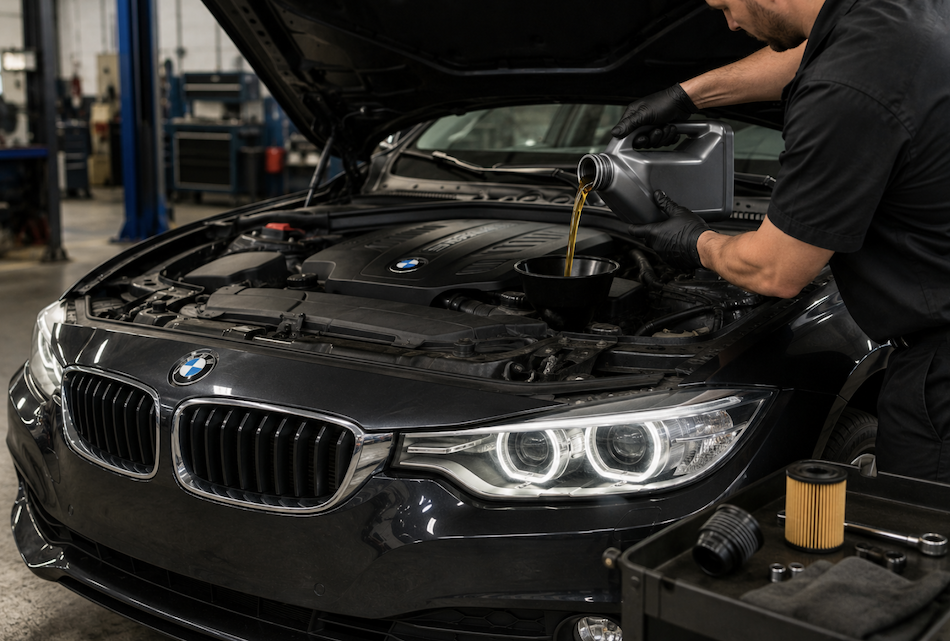
Technically, yes, almost any shop with a lift and a drain pan can physically change the oil in a BMW. Whether they can do it correctly is a different question entirely. BMW engines are picky about oil in a way that a lot of quick-lube chains and general garages simply aren't set up to handle, and getting it wrong doesn't always show up right away. If you'd rather skip the guesswork, a Peoria BMW repair center already stocks the correct oil specification for your exact model rather than a generic full synthetic that happens to be on the shelf.
Why BMW Oil Specification Actually Matters
BMW doesn't just recommend "full synthetic"; it requires oil certified to a specific Longlife standard, and which standard applies depends on your engine, model year, and market. LL-01 covers most gasoline engines up through around 2018. LL-04 is a low-SAPS formula built for diesel engines with particulate filters. LL-01 FE is a lower-viscosity fuel-economy variant used on newer engines and is the only approved oil for BMW's M-series Motorsport engines. The newest standards, LL-17 FE+, LL-19 FE, and LL-22 FE++, are formulated for current turbocharged and mild-hybrid engines and aren't always backward compatible with older ones.
The practical takeaway is that "full synthetic" on a bottle doesn't tell you whether it's actually right for your BMW. A shop needs to match the certification to your specific engine, not just grab whatever synthetic oil they stock for everything that comes through the door.
Does Using the Wrong Oil Actually Void Your Warranty?
Not automatically, and this is worth understanding clearly, because it changes how you should think about where to go. Under the Magnuson-Moss Warranty Act, a manufacturer can't require you to use their dealership for maintenance just to keep your warranty valid. An independent shop is legally allowed to service a BMW under warranty, as long as they use the correct parts and fluids and you keep documentation of the work.
Where it actually gets risky is the oil itself. BMW's warranty documentation excludes damage caused by improper or inadequate maintenance, and if a specific failure can be traced back to the wrong oil specification, that repair may not be covered. The warranty risk isn't about who did the oil change, it's about whether the correct spec oil actually went into the engine. It's the same logic that applies to deciding when a repair is actually worth tackling yourself versus handing it to a specialist, the DIY savings evaporate fast if the wrong part or fluid ends up costing you a bigger repair down the line.
What a Generic Shop Often Gets Wrong
A few specific things separate a BMW-competent oil change from a generic one:
Wrong Longlife specification. Many shops stock one or two "European" synthetic oils and use them across every import that comes in, without checking whether it actually matches your engine's required standard.
Skipping the service reset. BMWs with condition-based service (CBS) track oil condition electronically rather than working off a fixed mileage number. If the system isn't reset properly after service, it can keep counting down on old data.
Missing the bigger picture. A quick oil change at a general shop often skips the quick visual checks a BMW specialist would flag automatically, a coolant level that's drifting low, for instance, which is worth catching early rather than during your next dashboard warning.
Skipping fluid checks isn't a small thing on a BMW either. Neglected transmission fluid is a big part of what pushes BMW transmission repairs into genuinely expensive territory, and it's exactly the kind of thing a rushed oil-change visit tends to skip past.
How Often Does a BMW Actually Need an Oil Change?
BMW's condition-based service system doesn't work off a strict mileage number the way older vehicles do. It estimates remaining oil life using driving style, trip length, temperature, and mileage together, which is why two identical BMWs driven differently can show very different service intervals on the dash. As a general range, most BMWs land somewhere between 5,000 and 10,000 miles between changes, with frequent short trips or extreme heat, like a Peoria summer, pushing that number toward the lower end regardless of what the dashboard estimate says.
Independent Specialist vs. Quick-Lube vs. Dealership
A dealership will always have the correct oil on hand and staff trained specifically on BMW systems, but that comes with dealership pricing. A quick-lube chain is fast and convenient, but genuinely hit-or-miss on whether they stock the right Longlife spec for your specific engine rather than a generic import-friendly oil. An experienced independent BMW specialist tends to land in the middle, correct oil, real BMW-specific knowledge, and a price that doesn't carry full dealership overhead. The deciding factor isn't really the type of shop, it's whether they can tell you exactly which oil specification your engine requires without having to look it up on the spot.
The same shop-choice logic applies well beyond oil changes. Something like what actually drives power steering pump replacement costs depends heavily on whether the shop diagnosing it actually knows BMW systems, since a misdiagnosed pump is an easy way to pay for a repair that didn't need to happen.
Getting It Done Right
If you're not sure your last oil change used the correct spec, or you just want it done properly this time, call (602) 464-6556 and we'll confirm exactly what your engine needs before anything goes in.
You can also request an estimate here whenever it's convenient.
Frequently Asked Questions
Can I Get My BMW Oil Changed At A Regular Auto Shop?
Physically, yes, most shops can perform the mechanical steps of an oil change on a BMW. The real question is whether they stock and use the correct BMW Longlife-certified oil for your specific engine, since a generic synthetic oil may not meet the standard your engine actually requires.
Does Getting An Oil Change At A Non-Dealer Shop Void My BMW Warranty?
Not automatically. Under the Magnuson-Moss Warranty Act, independent shops can legally service a BMW under warranty as long as correct parts and fluids are used and documented. The real risk is using oil that doesn't meet BMW's required specification, since damage traced back to incorrect maintenance may not be covered regardless of who performed the service.
What Oil Specification Does My BMW Need?
It depends on your engine and model year. Most gasoline engines through around 2018 use LL-01, diesels with particulate filters use LL-04, and newer turbocharged and mild-hybrid engines use fuel-economy variants like LL-17 FE+ or LL-22 FE++. Checking your owner's manual or having a specialist confirm the exact spec is the only reliable way to be sure.
How Often Should A BMW Get An Oil Change?
BMW's condition-based service system estimates this electronically based on driving habits rather than a fixed number, but most BMWs fall somewhere between 5,000 and 10,000 miles between changes. Frequent short trips or extreme heat can shorten that interval even if the dashboard hasn't flagged it yet.
Is It Cheaper To Get A BMW Oil Change At A Quick-Lube Chain?
Often on the sticker price, yes, but it carries more risk of the wrong oil specification going into your engine. An experienced independent BMW specialist typically costs less than a dealership while still using the correct Longlife-certified oil, which makes it the more reliable middle ground for most owners.